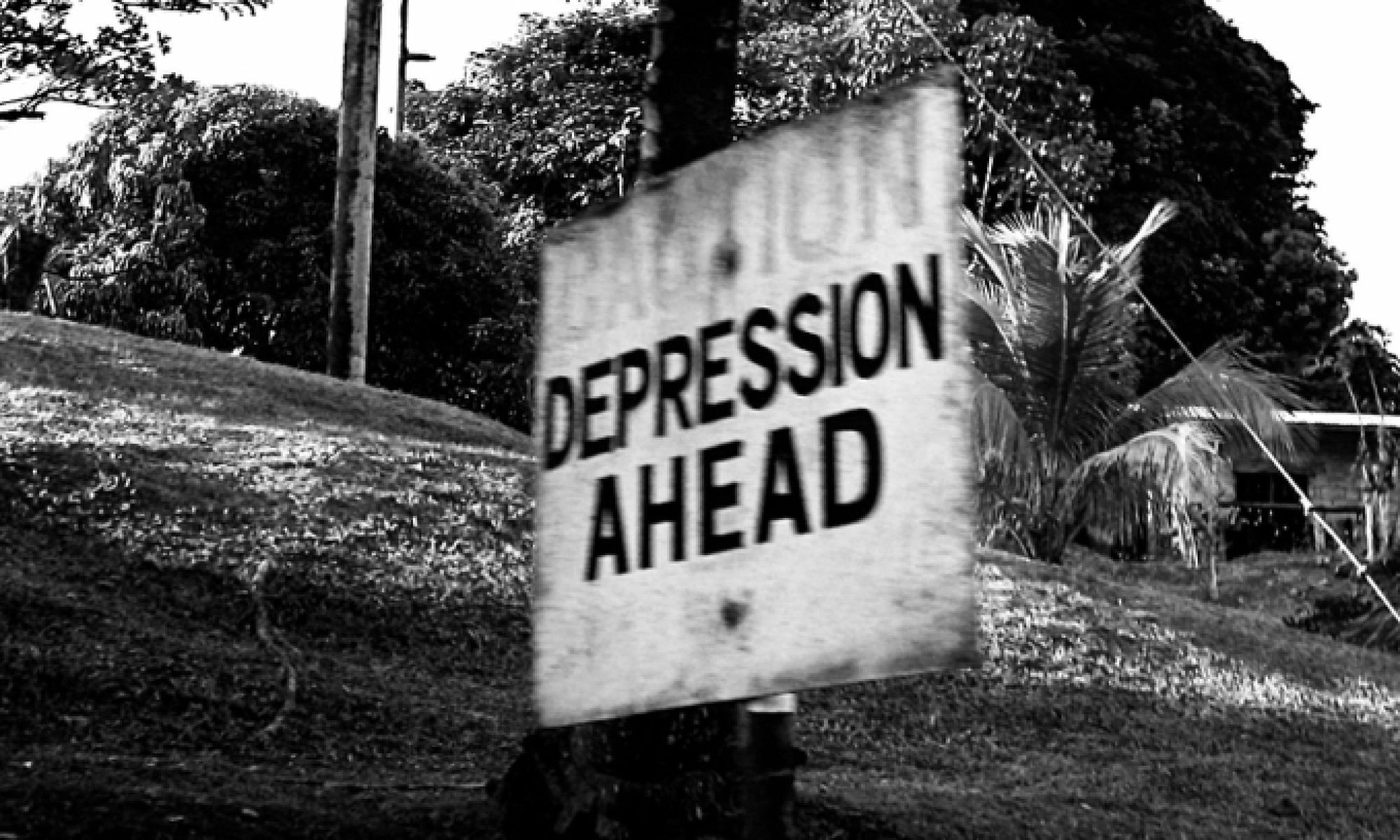
The structure to ensuring the right Employee Experience

In the recent weeks I had many conversation with other companies as well as some vendors and consultancies of HR and Experience (Technology). The conversations were manyfold – around payroll, around onboarding, which technologies best to use and how to utilize which technology best. All of these conversations were very insightful and I hope my conversation partners felt the same. There is always a lot that I take out of such conversations – always a big chance to learn new ways, new things, or even new obstacles that I haven’t faced yet and how to get over them. I have unfortunately not always sufficient time to have as many conversations as I want – but truly enjoy each and every one of them.

Now, across most of these conversations in the recent weeks there was one topic that stood out for me, but I believe also for my conversation partners: the team structure to ensure the right Employee Experience.

At some point in almost all of these conversations, the question comes up “Do you report into HR or Technology?” or “Are you on the HR or the Technology side of the business?” – my answer is always the same: Both. My team might have one solid reporting line, but it has at least one dotted as well. But I believe it doesn’t really matter. Important is that it is focused and oriented at both, HR and Technology. – and so is my team, built as HR and Technology Experts. 

My believe is that even more tomorrow than today, HR and Technology need to come closer together. An HR professional without Technology background and knowledge will not come far in our digital (HR) world, and a Technology expert without HR background will not be too sought after either. The actual power lies in smartly combining these two capabilities.

All future HR processes or solutions should be digital first, and for it to be digital you must have the right Technology capability – and the best is if that same capability also knows the what and why of “why you are actually designing and deploying this process/ technology” – what is the purpose , the ultimate goal and reason behind it. And you can only build that with both capabilities hand-in-hand. 

But not only that is important, in the end, it is not about deploying a technology solution to enable a process. It is about deploying a supportive, non-distracting, simple to use Experience for all employees, so that it is actually used and can deliver on the promise you made, deliver on why you actually built it in the first place. Only then it is a win, or as Josh Bersin put it in a recent fireside chat at #WDRising: “If they don’t use your process or technology, it is your problem to solve.”

And because of all of the above, I believe that from latest today onwards, there is no space anymore for an HR IT department. Why? – because it by structure decouples HR and IT, it calls it even out separately. Therefore, it won’t be integrated – as much as you could argue now that it is about proper demand management, and consulting of the HR IT colleagues to the HR colleagues, as much I would tell you: Yeah, that was semi-successful in the past. In today’s world, it is all about Employee Experience and about delivering an integrated, seamless, simple and high quality Experience. And the only way you can do that is if you have an Employee Experience Organization that actually strategizes, designs, develops and deploys as ONE. An integrated  team of HR and Technology experts that focus on this every day, jointly – and can focus on very specific Experiences like “join” or “career” or “rewards” as an integrated team of cross-capability experts. 

If you don’t have your structure set up like this today, go there, do it, you won’t regret it. Important note though: Maybe your current teams are not up for such approach, that could very well be – but then the question is: Is it the right talent? What I am certain of is that if you build such an integrated team, you will attract highly capable talents and you will raise their future employability as they are set up for the future. The future of Digital Employee Experience.

Re-thinking the role of on-site (HR) support

Last week I have shared my thoughts regarding digitalizing the manufacturing and field-sales workforces – or in more general: workforces that do not have a desk and computer to get their work done and that don’t need such skills for their job. One of the outcomes of this was the identification of an infrastructure and enablement support gap for these workforces. 

A look back

In recent years, all support functions, including HR have focused on getting the core job done, but only that – more and more grey areas, activities that could sit in between different functions have been neglected and left unspoken. As long as “someone” was still there to take care of them, it was ok – somehow. But as a next step, more and more functions have outsourced their service provisioning – may it be IT, HR or Facilities. And a key component of outsourcing is that you have a clear and set list of activities agreed with your outsourcing providers and they won’t do anything in addition. This has widened the gap between functional activities, and subsequently has widened the grey areas in between functions – and increased activities that somehow no one picks up anymore. Who is accountable for local on site communication, e.g. setting up banners/ posters or handing out leaflets? Who is responsible for functional agnostic trainings and initiatives? – well, in many cases there is no one anymore who can pick that up. 

Who still remembers the typical outsourcing & process design conversation when an activity could be done like 80%-90% remote, but there was a final, last piece that required on-site presence? May it be handing over a physical device or letter, may it be receiving a physical letter, telegram or whatever it may be. The generic answer of your outsourcing consultant was: I am sure there is someone else on site that can do that – for example the receptionist! … well, the receptionist is gone as well or outsourced. As much as I love digitalizing work, it still has its barriers and boundaries, and if we don’t care for them, the experience will break down. 

So what is the conclusion?

I am making the case to continue to have on-site support in place. But this is a combination of roles and functions. It is not a dedicated HR specialist nor a dedicated receptionist nor a dedicated IT support nor a specialized communications person. I believe that at the same time and for similar reasons that we should consider function-agnostic, general Tier 1 help-desk support (ONE number, ONE contact for all your employee queries, regardless if HR or IT or Travel or …), we should consider a function-agnostic, in-person Experience support on sites where there is not a fully digitalized workforce. There is more than enough work on site – and even if you go for a medium seniority and capability to be able to address the topics mentioned above, I am certain that the time saved for regular employees and managers to not be interrupted at their work, the disruption avoided because a process breaks down at the end with the final step which requires physical on-site handling or the disruption of a process not being initiated as it requires on-site initiation will not only make the experience case, but the financial case work. 

The Experience Function

Employee Experience is about minimizing disruptions to your workforce, engaging your workforce to bring the best every day, to do their core role best every day – and sometimes this requires non-digital support. We in HR are often the last ones to stop physical on-site presence and are therefore often the ones needing to solve for the grey areas – but also at the same time questioned as to why we cannot reach the anticipated and benchmarked “HR to employee” ratio, why we still need on-site presence of “that size”?! Just adhering to it and letting go of on-site presences is one answer – but I believe an answer that will lead to low experience and process breakdowns. At the same time, the on-site required true HR work does often not make the case for a full-time or even half-time HR admin person on site. This is why I believe we need to think bigger and need to think about E2E Experiences for employees and managers. If we consolidate all on-site work that focuses on the experience and requires on-site presence, I am sure we will be able to accommodate at least a part-time presence.  The difference is that this is an Experience resource, not an HR resource and therefore should not be counted in the typical HR ratio benchmarkings. Costs will be cross-funded if you continue to have separate functions.

The alternative though, if you look back to my article “Thinking Further – the Experience Organization” from earlier this year, could be a different direction. We must think broader than HR and become an Experience Function, and as part of such function, all of the above is within scope suddenly. Read the link above for the whole story behind it. I am a strong believer that now is the time to break-up HR and create an E2E Experience Function. What do you think?